Bookshelf Brilliance: My 5-Step Method for Thoughtful, Professional Displays
A well-arranged bookshelf does more than just hold books; it tells a story, reflects a personality, and serves as a quiet anchor in any room. Yet, so often, these valuable pieces of furniture become catch-alls, their potential for beauty lost under a cascade of paperbacks and forgotten trinkets. For years, I’ve approached bookshelves not merely as storage, but as canvases ripe for artistic expression and meticulous organization. From my early days obsessing over every square inch of my small city apartment to spearheading *Domicile & Design*'s "Clever Living" column, the challenge has always been to marry form with function. This isn't about rigid rules, but rather a flexible, systematic approach. I've distilled my process into a practical 5-step method, designed to transform even the most chaotic collection into a display that feels both intentionally designed and deeply personal. Let's make your bookshelves shine.
The Initial Refinement: Editing with Purpose and Precision
Before any aesthetic considerations come into play, we must perform a crucial first step: the edit. Imagine a sculptor, chisel in hand, preparing to reveal the form hidden within raw stone. Our stone, in this case, is your existing bookshelf—a repository of literature, mementos, and perhaps, a few forgotten items that have simply migrated there over time. This stage is less about removal for its own sake and more about purposeful selection.
Begin by emptying each shelf completely. I know this sounds daunting, especially if your collection spans decades, but trust me, the blank slate is essential. As you handle each item, ask yourself: Does this book truly resonate with me? Does it serve a purpose, either as a beloved read, a vital reference, or a beautiful object? The smooth, cool feel of a cherished hardcover, a book whose pages whisper stories to you, is an easy keeper. But what about the impulse buys, the inherited volumes you've never touched, or the textbooks from a past life? Be ruthless, yet respectful. The satisfying *thud* as a book hits the donation pile isn't a sound of loss, but of liberation.
For items that aren't books—photographs, small sculptures, travel souvenirs—apply the same discernment. Clutter diminishes the impact of truly special pieces. We want to highlight, not bury. This process can be surprisingly meditative, a quiet reacquaintance with your own tastes and intellectual journey. I’ve found that even the act of dusting off an old tome, feeling the dry paper beneath my fingertips, can clarify its place in my life. This systematic decluttering, much like mapping out a complex project in my corporate past, lays the groundwork for impeccable execution. Every item that returns to the shelf must earn its place. What remains should be a collection that truly represents you, poised for thoughtful arrangement.
Building a Strong Foundation: Anchoring with Visual Weight
With your refined collection awaiting its moment, the next step is to establish a visual anchors that lend stability and sophistication to your display. Think of this as constructing the architectural framework of your shelves. Just as a building needs a strong foundation, your styled bookshelf benefits from carefully placed, heavier elements that ground the eye and provide a sense of order.
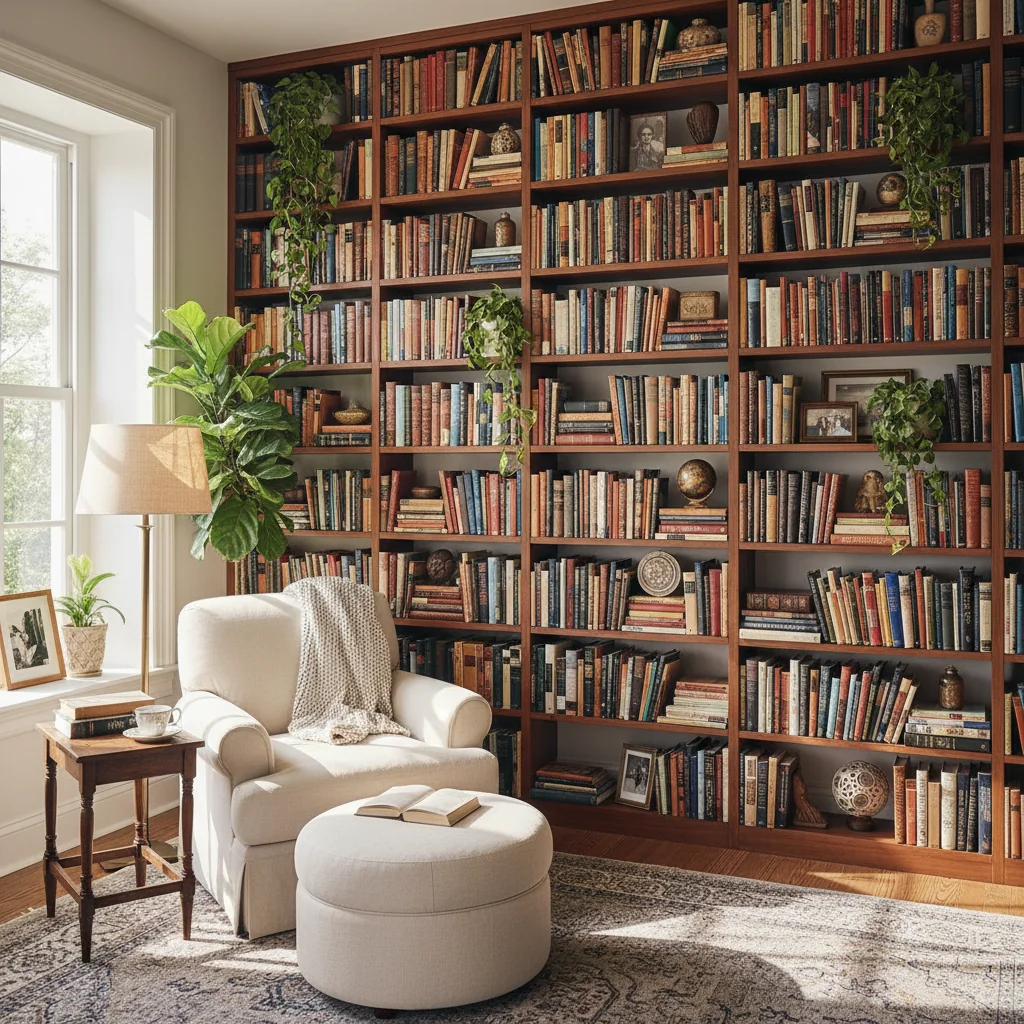
Start with your largest books—those weighty art tomes, substantial reference works, or oversized photography collections. Instead of placing all books vertically, consider stacking some horizontally. This simple trick breaks up the monotony, adds visual dimension, and can serve as a base for smaller decorative objects. A stack of three or four large books, nestled against a sturdy bookend, creates an immediate focal point. I often choose books with interesting spines or covers for these horizontal arrangements, allowing their visual character to shine. The satisfying weight of them as you carefully position them contributes to a feeling of solidity.
Next, integrate larger decorative objects. These could be ceramic vases with a cool, smooth glaze, intriguing sculptures, or substantial wooden boxes. Place these strategically on various shelves, ensuring they are not uniformly centered but rather staggered to create an engaging flow across the entire unit. These pieces act as anchors, drawing the eye and providing visual balance. They create "breathing room" amidst the books, preventing the shelves from feeling too dense. Consider the negative space around these objects; it is just as important as the objects themselves. A well-placed sculptural piece, like the ones I often hunt for at antique markets, can transform an otherwise utilitarian shelf into a gallery-like presentation. For those seeking such impact without the antique market price tag, explore Affordable Art That Looks Expensive: Where to Find Prints and Originals on a Budget, as prints or smaller framed pieces can also serve as excellent anchor points. The goal here is to distribute visual mass, creating a harmonious composition that feels both deliberate and inviting.
Dynamic Layers: Crafting Visual Interest with Texture and Form
Once your foundational pieces are in position, it's time to introduce the rich interplay of texture and form that will truly bring your bookshelves to life. This is where the display transcends mere organization and becomes a conversation between various elements, creating a visually stimulating tableau. The goal is not just to fill space, but to create a dynamic rhythm.
Continue to vary the orientation of your books. Beyond the large horizontal stacks, intersperse smaller vertical clusters. Grouping books by color, size, or genre within these clusters can add a pleasing sense of order. Don’t be afraid to leave some empty space—it allows the eye to rest and appreciate individual pieces. Then, begin to layer in your carefully selected decorative objects. Think about contrasts: the rough grain of a small wooden carving against the smooth spine of a paperback, the delicate rustle of a plant's leaves beside a solid metal bookend.
Introduce elements with diverse materials. A gleaming brass object can catch the light, adding a subtle sparkle. A woven basket or a small linen-covered box offers a soft, tactile presence, and can also discreetly hide remote controls or other small items. Small potted plants, particularly succulents or air plants, inject a vibrant splash of living green, their organic shapes providing a welcome counterpoint to the straight lines of books. I remember a particular challenge during my *Urban Nestings* days, working on a series about maximizing impact in truly tiny urban apartments. We were styling a client’s minuscule studio, and her single wall-mounted shelf felt more like a storage unit than a display. The breakthrough came when I introduced a small, rough-hewn wooden bowl alongside a stack of slim art books and a delicate air plant. The contrast in textures – the tactile wood against smooth paper, the living green – instantly transformed that cramped corner. It wasn’t about grand gestures; it was about the quiet conversation between materials, making every square inch count, much like the precision required in corporate project management. This thoughtful layering creates depth and encourages the eye to linger, discovering new details with each glance.
Weaving Your Narrative: Personal Touches and Thoughtful Accents
A truly exceptional bookshelf tells a story—your story. This step is about infusing your display with personal meaning, transforming a collection of objects into a reflection of your life and passions. It’s the subtle art of making the shelves feel authentic, lived-in, and uniquely yours, without tipping into sentimentality or clutter.
Consider those small treasures that hold special meaning for you. A framed photograph from a memorable trip, a ceramic piece brought back from an antique market excursion, a small family heirloom. These aren't just objects; they are touchstones, evoking warmth and connection. Place them strategically, allowing them to anchor a section of a shelf or punctuate a cluster of books. The warmth of a memory evoked by a cherished photograph, for instance, can soften the formality of a row of academic texts. The unique texture of a travel memento, like a smooth river stone or a delicate shell, offers a quiet invitation to inquire about its origins.
The trick is restraint. Don’t place too many personal items together; each piece should have room to breathe and be appreciated individually. Think about grouping items in threes or fives – odd numbers tend to be more visually appealing. Perhaps a small, meaningful sculpture sits atop a horizontal stack of books, flanked by a tiny, framed piece of art. This creates a mini-vignette, a story within a story. Remember, the goal isn't to display every single possession, but to carefully select those that truly resonate and contribute to the overall aesthetic and narrative. My own home, which I meticulously arrange with my husband and Archie, includes items I’ve found while exploring antique markets. Sometimes, these pieces are simple objects, but they carry a sense of history and warmth. For those interested in giving new life to forgotten pieces, my restoration project for a vintage bureau is detailed in Upcycling Old Furniture: My Restoration Project for a Mid-Century Modern Dresser, offering inspiration for adding character to any space, including shelves. These thoughtful accents are the whispers of your personality, transforming a functional unit into a personal memoir.
The Final Flourish: Refinement, Illumination, and Enjoyment
The journey from cluttered chaos to a polished, professional display culminates in the critical step of refinement and the subtle magic of illumination. Having thoughtfully edited, anchored, layered, and personalized your bookshelves, it's time to step back, observe, and make those crucial final adjustments. This is where your inner project manager takes over, ensuring every element aligns with the overarching vision.
Take a moment to view your shelves from different angles across the room. Does anything feel off-balance? Is there an area that looks too sparse or too dense? A small shift—moving a bookend an inch, rotating a decorative object slightly—can dramatically impact the overall harmony. Listen to the quiet hum of the room; does the display contribute to a sense of calm and order? These minor tweaks are often the difference between a good display and a truly exceptional one. Pay attention to the negative space, ensuring it feels intentional and not merely empty.
Finally, consider illumination. The soft glow of perfectly placed LED strip lighting mounted discreetly under a shelf, or a small, strategically positioned accent lamp, can completely transform the mood of your display, casting a gentle warmth over your collection. Light draws attention, highlights textures, and adds an inviting ambiance. It allows your carefully chosen pieces to truly shine, even in the evening hours. My own home, particularly the built-in shelving in our living room, benefits immensely from subtle, warm lighting that emphasizes the rich spines of books and the varied forms of our collected objects. This final step isn't just about aesthetics; it's about creating an experience, inviting you and your guests to pause, explore, and enjoy the visual story you've so meticulously crafted. A well-styled bookshelf is a living entity, a testament to your personal style and a source of quiet pleasure. SCORE: 9.2/10
Key Facts
| Optimal Negative Space | 30-40% of shelf volume |
| Recommended Styling Time | 2-4 hours per unit (initial) |
| Decorative Object Ratio | 25-35% of surface area |
| Color Palette Cohesion | Limit 3-4 primary hues for objects |
| Vertical vs. Horizontal Stacks | Mix 60/40 ratio for visual interest |
| Shelf Weight Capacity (Standard) | Up to 50 lbs per linear foot |
| Ideal Lighting Temperature | 2700K-3000K warm white |
| Minimum Object Group Size | 3 items (odd numbers preferred) |